
ALOE VERA: THE CELLULAR ARCHITECT AND THE PLANT OF IMMORTALITY
Known to the ancient Egyptians as the “plant of immortality”, Aloe barbadensis Miller is a biological treasure. Its thick leaves conceal a transparent gel made up of 95% water, together with more than 20 minerals — including zinc, magnesium and selenium —, vitamins A, B, C and E, and essential enzymes. The secret behind its cosmetic…
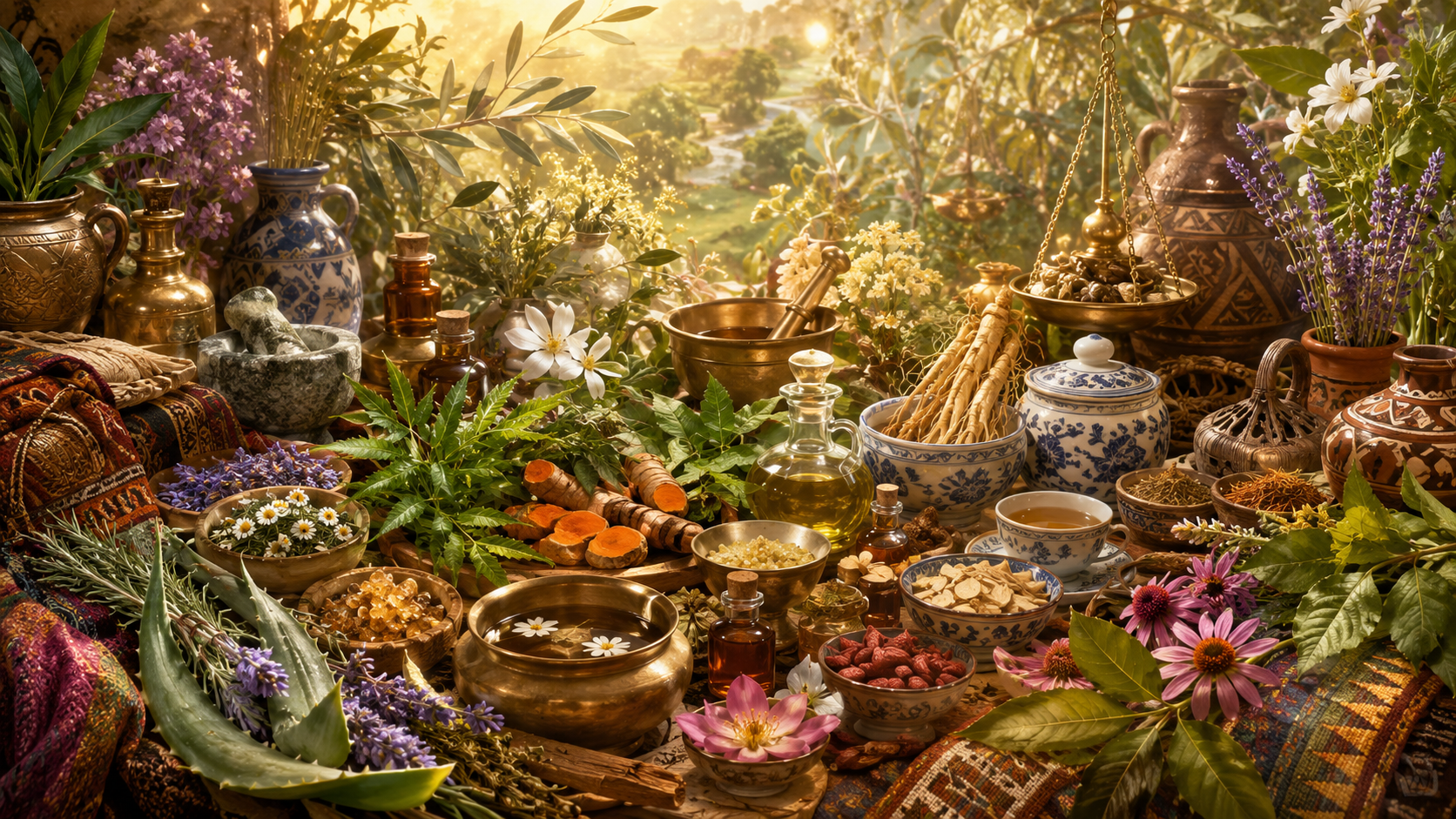
Read it as a cultural and cosmetic guide. The aim is to understand the origin, meaning and formulation of these ingredients more clearly, not to replace medical advice or promise therapeutic results.
Where Aloe vera gets its aura from
Aloe vera carries a very old story across Egypt, the Arab world, the Mediterranean and warmer parts of Asia. The inner gel of the leaf quickly became a household resource associated with freshness, superficial recovery and care after sun exposure or environmental dryness.
In many homes, its use moved between popular cosmetics and everyday remedy. Yet that reputation should not turn into a universal promise: the real cosmetic value of aloe for skin and hair always depends on formulation, individual tolerance and context of use.
Cultural uses focused on skin and hair
On the skin, aloe has long been linked to a feeling of calm, moisture and light relief. In hair and scalp care, its texture became popular in gels, plant-based washes and products that aim to hydrate without heaviness.
That cultural journey helps explain why aloe remains central in frequent-use cosmetics: it speaks to a very recognisable need, returning a sense of softness and reduced strain to skin and hair.
Known to the ancient Egyptians as the “plant of immortality”, Aloe barbadensis Miller is a biological treasure. Its thick leaves conceal a transparent gel made up of 95% water, together with more than 20 minerals — including zinc, magnesium and selenium —, vitamins A, B, C and E, and essential enzymes. The secret behind its cosmetic effectiveness, however, lies in a very special carbohydrate: glucomannan, a mannose-rich polysaccharide that directly stimulates fibroblasts in the dermis and significantly increases collagen synthesis, particularly type III collagen. This helps wounds contract more quickly and strengthens scar tissue.
Beyond regeneration, Aloe vera is also a remarkable anti-inflammatory ingredient. It works through three fascinating mechanisms: it contains an enzyme, carboxypeptidase, which deactivates bradykinin, a molecule involved in pain and inflammation; it naturally produces salicylates; and its magnesium lactate inhibits the formation of histamine. To use the gel in its pure state, it is essential to remove the aloin found in the yellow latex of the leaf, as this substance can be highly irritating to the skin.
THE ART OF COMBINING IT
In hair care, Aloe vera reduces excess sebum, hydrates the follicles and helps combat dandruff thanks to its fungicidal properties. When intelligently combined with other ingredients, its effects are multiplied:
- With coconut oil: the deep hydration provided by aloe, combined with the fatty acids in coconut oil, creates an outstanding treatment for revitalising damaged and very dry hair.
- With honey: this synergy acts as an intelligent sebum regulator, hydrating oily hair without disrupting the sebaceous glands.
- With olive oil and clay: the mixture becomes an exceptional exfoliating mask that oxygenates the hair follicles and removes dead cells from the scalp.