
CHAMOMILE AND WITCH HAZEL: SCIENCE AND FLORAL GENTLENESS TO CALM INFLAMED SKIN
When the skin reacts badly and develops eczema, dermatitis or severe erythema, botanical ingredients with proven medical effectiveness are required. Chamomile, Matricaria chamomilla, is one of the finest examples. Its essence contains a remarkable chemical compound: chamazulene, which is not present in the fresh plant but forms from matricin during distillation, giving the oil its characteristic…
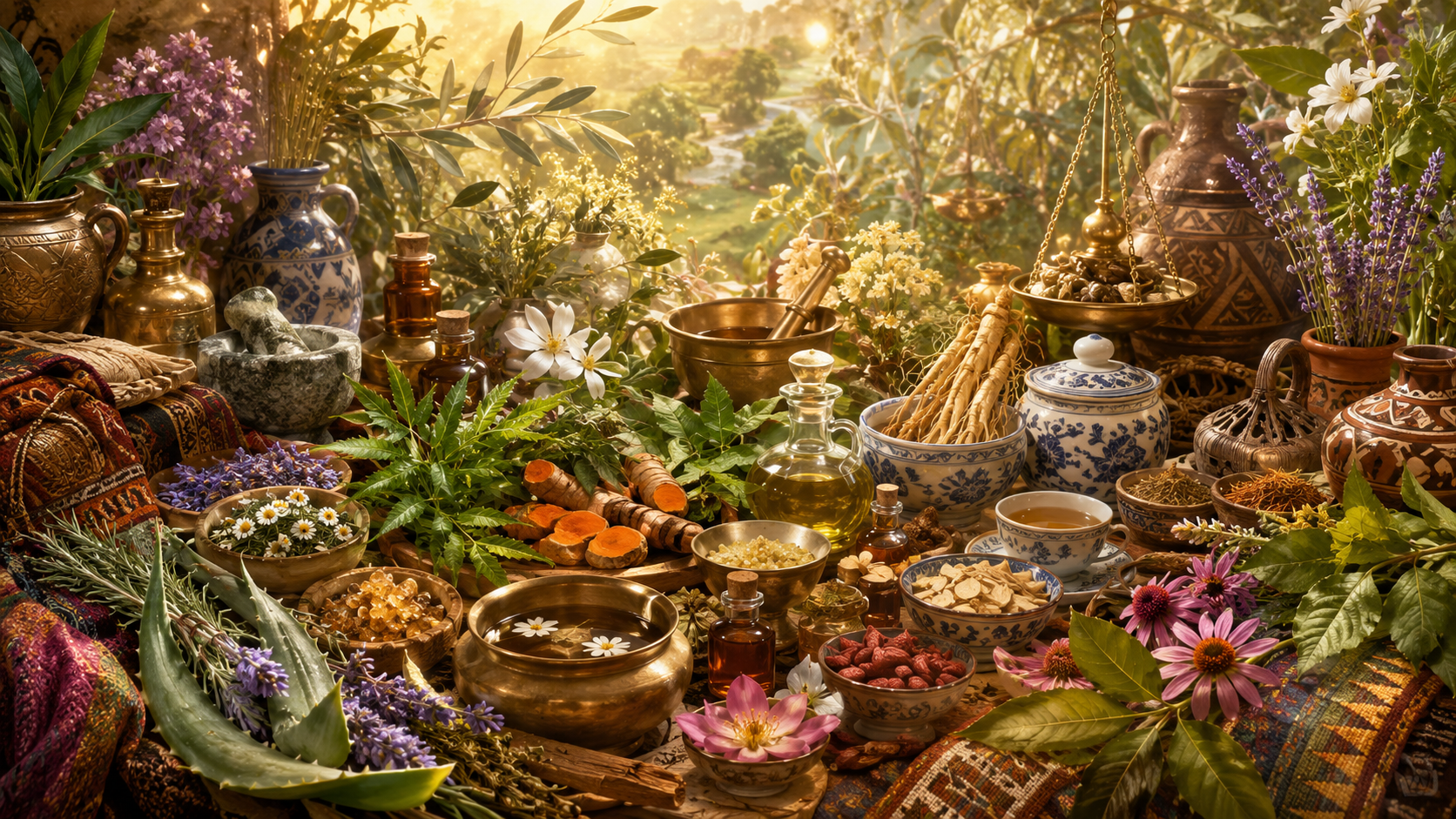
Read it as a cultural and cosmetic guide. The aim is to understand the origin, meaning and formulation of these ingredients more clearly, not to replace medical advice or promise therapeutic results.
Between folk pharmacopoeia and delicate skin
Chamomile has belonged to the European domestic landscape for centuries. Witch hazel, although native to North America, entered modern cosmetics and herbal culture as a plant linked to restraint, freshness and the care of skin that reacts quickly.
The meeting of these two plants is culturally very coherent: one speaks of gentleness and softness; the other of order, tone and a tighter surface feel.
Their cosmetic reading on the skin
In both traditional and cosmetic use, chamomile has been linked to skin that wants less friction. Witch hazel has been linked to formulas seeking a fresher, more contained feeling. Together they create a very clear cosmetic language for reactive skin.
It is no surprise that they still hold a strong place today in toners, after-sun care and soothing formulations.
When the skin reacts badly and develops eczema, dermatitis or severe erythema, botanical ingredients with proven medical effectiveness are required. Chamomile, Matricaria chamomilla, is one of the finest examples. Its essence contains a remarkable chemical compound: chamazulene, which is not present in the fresh plant but forms from matricin during distillation, giving the oil its characteristic blue colour.
Chamazulene, together with α-bisabolol and flavonoids such as apigenin and luteolin, acts by enzymatically inhibiting cyclooxygenase — COX — and 5-lipoxygenase, which are responsible for producing prostaglandins and leukotrienes involved in inflammation. In clinical studies, an ointment containing chamomile flower extract has proved more effective than some 0.1% hydrocortisone treatments for toxic dermatitis and atopic eczema, reducing redness without causing serious side effects.
Witch hazel, Hamamelis virginiana, complements this action perfectly. Its bark is exceptionally rich in tannins, particularly hamamelitannins, and oligomeric proanthocyanidins. These compounds provide a powerful astringent effect and have demonstrated an ability to protect fibroblasts against oxidative stress, while significantly reducing erythema or burns caused by UV-B radiation.
THE ART OF COMBINING THEM
This synergy lies at the heart of many soothing toners and after-sun lotions. When combined with thermal water or an Aloe vera base, chamomile relieves pain and inflammatory itching, while witch hazel helps tighten the pores and protect skin damaged by sunlight or friction. Together, they form a clinically supported shield for even the most reactive skin.